Uses and Health Benefits of Coconut Milk
The scientific name of coconut is Cocos nucifera. Coconut milk is a white liquid extracted from the grated flesh of mature coconuts and is known for its distinctive nutty flavour. It is commonly used in a variety of dishes including fish, poultry, meat and vegetable preparations as well as in baked goods. This is particularly true in many Asian and Pacific countries where coconuts are naturally abundant and form an integral part of the local cuisine.
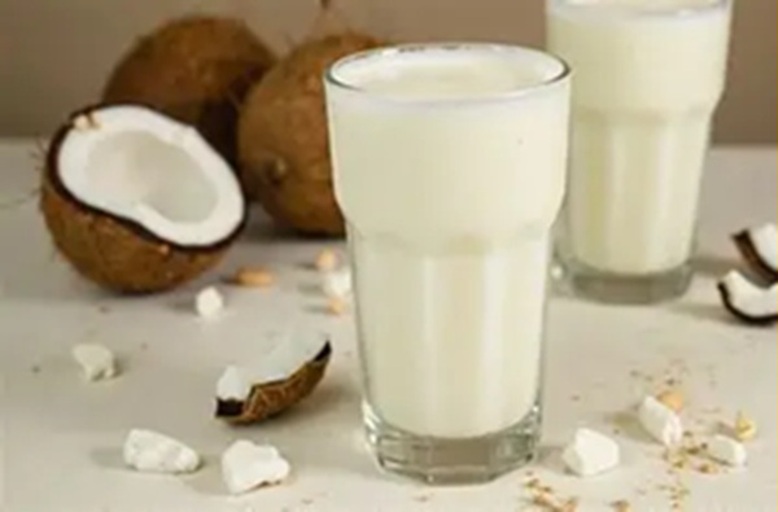
Coconut milk is widely available in several processed forms, such as canned, tetra pack, and dehydrated varieties. These have gained considerable popularity in the global market due to their convenience and extended shelf life. The nutritional value of 100gm of coconut milk is as follows:
Carbohydrate: 65 g
Energy: 375 kcal
Fats: 12.5 g
Fatty acids: 12.5 g
Sugars: 60 g
Potassium: 100 mg
Sodium: 75 mg
Coconut milk has the following properties:
It may enhance the metabolism.
It may improve digestion.
It may protect against viral infections.
It may protect against fungal infection.
It may fight against bacteria.
It may be an antioxidant.
It may protect against cancer.
The benefits of drinking coconut milk are as follows:
1. Coconut milk contains medium-chain fatty acids, which are metabolised differently from long-chain fats. These fatty acids are typically transported directly to the liver, where they may be rapidly converted into energy rather than being stored as fat. However, further research is needed to confirm its effectiveness as a consistent energy source. Always consume in moderation and seek medical advice if unsure.
2. The medium-chain fatty acids in coconut milk are generally easier to digest and absorb. These fats may be broken down quickly without requiring pancreatic enzymes, potentially offering support for those with digestive difficulties. However, more research is needed, and individuals should consult a healthcare professional before using it for this purpose1. Further research on the effect of coconut milk on digestion is required.
3. Coconut milk may help fight against viruses like herpes and HIV. Monolaurin in coconut milk may disrupt the lipid membranes of the virus causing disintegration of the viral envelope and restricting its activity. However, further studies are required to assess the effect of coconut milk on viral infections. Some viral infections are dangerous. In such cases, you must consult your doctor instead of self-medicating.
4. Some studies suggest that coconut milk may exhibit antifungal properties, particularly against Candida albicans. A compound found in coconut milk, monolaurin, is believed to disrupt fungal cell membranes. However, further research is needed, and coconut milk should not be used as a substitute for medically approved antifungal treatments. More research is required to confirm the anti-fungal activity of coconut milk and if you suspect a fungal infection, you must immediately consult your doctor and seek proper treatment.
5. Potential Use of Coconut Milk for Bacterial Infections: Coconut milk is thought to possess mild antimicrobial properties. Some research indicates it may act against certain bacterial strains, including Staphylococcus, Streptococcus, and E. coli. Monolaurin, a compound present in coconut milk, is believed to disrupt bacterial cell membranes. However, coconut milk should not be considered a replacement for medically prescribed antibacterial treatments. Further studies are required to confirm the anti-bacterial properties of coconut milk. You must consult your doctor if you suspect a bacterial infection and get treated instead of self-medicating.
6. Potential Use of Coconut Milk for Cancer: Coconut milk may be beneficial for cancer. Various studies5 on cell lines have shown that coconut milk may help in the case of cancer. Coconut milk may kill the cancer cells and suppress the growth of cancer-causing cells. Coconut milk may fight against cancer cells due to its antioxidant properties. Further clinical studies are required to determine the effect of coconut milk on cancer. However, cancer is a serious disease and get proper medical checkups rather than self-medicating.
7. Potential Use of Coconut Milk for Reducing Cholesterol Levels: Some studies suggest that the fatty acids in coconut milk may influence cholesterol levels. Research involving healthy adults aged 25–60 indicated a potential decrease in LDL (bad) cholesterol and an increase in HDL (good) cholesterol. However, more evidence is needed and coconut milk should be consumed in moderation as part of a balanced diet. It is vital to check your cholesterol levels regularly and consult your doctor in case of abnormal cholesterol levels.
8. Potential Use of Coconut Milk for Managing Anxiety: Animal studies suggest that coconut milk may have antioxidant properties that could help manage anxiety, possibly due to nutrients like vitamin C, vitamin E, selenium, and zinc. However, human studies are needed to confirm these effects. Anyone experiencing anxiety or panic attacks should seek professional help from a psychiatrist or therapist.
Leave a comment